

Initial Summary
Most academic websites are invisible to the people who matter most. A prospective PhD student searching "computational biology professor Singapore" won't find you if your site has no title tags, no keyword structure, and no links pointing to it from anywhere. Academic SEO is not about gaming algorithms, it's about ensuring that your research, your expertise, and your lab are findable by the people actively looking for exactly what you offer. This guide walks through how to build an academic SEO strategy from scratch, with no technical background required.
Academic SEO differs from commercial SEO in one important way: the search intent of your audience is highly specific and deeply motivated. Someone searching for a lab to join or a collaborator to approach already knows what they want. Your job is simply to make sure your site appears when they're looking.
Why Most Academic Websites Fail at SEO
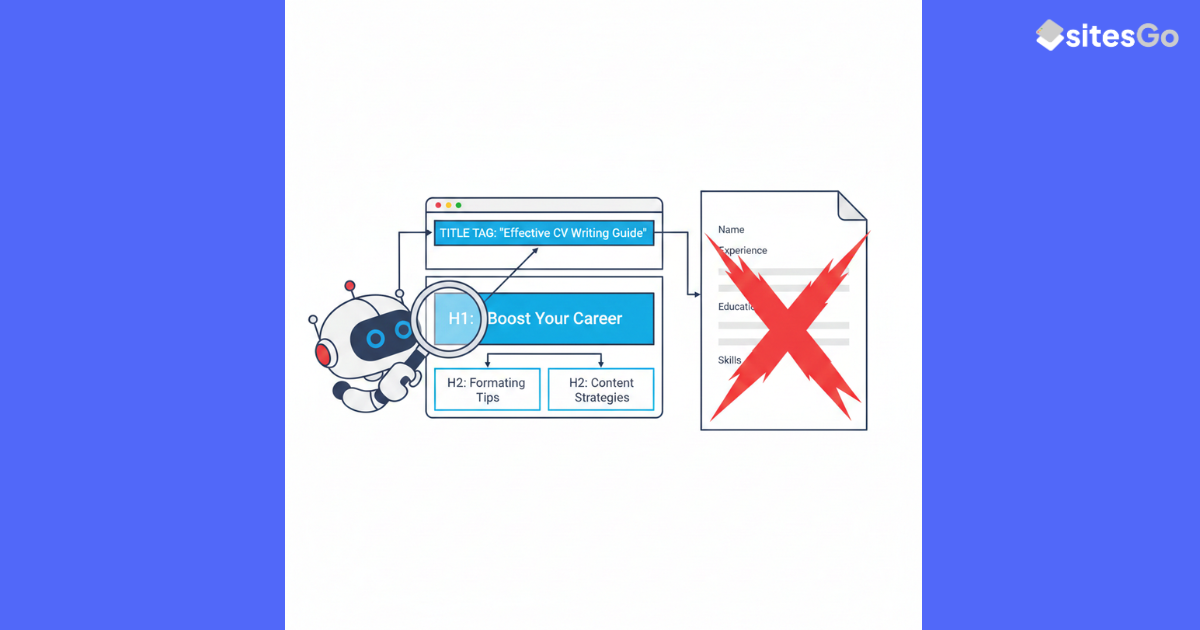
The failure mode is almost always the same: a professor builds a clean, functional website that contains all the right information, but structures none of it for search engines. The navigation is labelled "Research" instead of "Computational Biology Research Singapore." The homepage has a name and a photo but no descriptive text. Publications are listed as bare citations with no context or summaries.
Search engines can't read your CV. They read your page structure, your headings, your descriptive text, and the links pointing to your site from elsewhere on the internet.
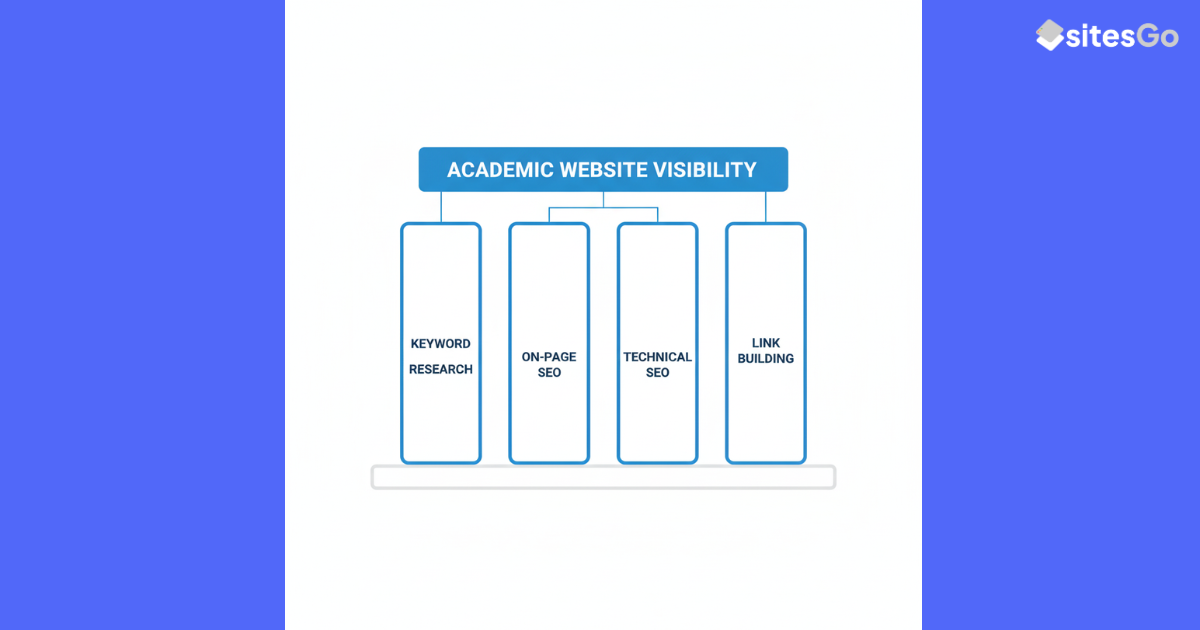
The Four Pillars of Academic SEO
1. Keyword Research: What Are Your Audiences Actually Searching For?
Before optimising anything, you need to know what terms your target audiences actually type. The best academic keyword research focuses on three categories:
Name-based searches: "[Your Name] professor," "[Your Name] research," "[Your Name] [Institution]." These are the easiest wins—your own name is your most unique keyword.
Topic-based searches: "[Your Research Area] professor [City/Country]," "[Your Research Area] lab [Institution]." These are the searches that bring in prospective students and collaborators who don't know you yet.
Problem-based searches: These are the hardest to identify but most valuable—the questions non-academic audiences type when they're looking for the kind of expertise you have. For a climate scientist, this might be "sea level rise researcher Singapore." For a health economist, "healthcare cost researcher Asia."
A practical starting point: open Google's search bar and type the beginning of each of these queries. The autocomplete suggestions are a direct window into what real people are searching for.
Key Insight: Your Google Scholar profile is one of the most powerful academic SEO assets you have and most professors leave it half-built. A complete Scholar profile with a professional photo, verified institutional email, research interest keywords, and regularly updated publications significantly boosts how your work surfaces in both Google Scholar and regular Google searches. It takes less than 30 minutes to complete properly.
2. On-Page SEO: Structuring Your Pages for Search Engines
Every page on your site has four components that directly affect how search engines understand and rank it:
Title tag: The clickable headline that appears in search results. It should include your primary keyword naturally. "Research | Professor Name" is weaker than "Computational Biology Research — Professor [Name], NUS Singapore."
Meta description: The two-sentence summary under your title in search results. Write it for humans, not bots—it's what convinces someone to click.
Heading structure: Your page should have one H1 (your main topic), followed by H2s for major sections and H3s for subsections. Search engines use this hierarchy to understand what your page is about.
Body text: Pages with no descriptive text—just lists of publication titles and author names—are essentially invisible to search engines. Every research project on your site should have at least two sentences of plain-language description
3. Technical SEO: The Foundation Your Content Sits On
Technical SEO sounds intimidating but for academic websites it reduces to five things:
Site speed: Pages that load in under three seconds rank better. If you're on a managed platform like Squarespace or Webflow, this is handled for you. If you're self-hosting, run your site through Google's PageSpeed Insights and fix the top three issues.
Mobile optimisation: More than half of academic website visits now happen on mobile. Your site must be fully functional and readable on a phone.
HTTPS: Your site must use a secure connection (the padlock in the browser bar). Every reputable platform provides this for free.
Structured headings: See the on-page section above. Consistent H1/H2/H3 structure also signals document organisation to search engines.
Sitemap: A sitemap is a file that tells search engines which pages exist on your site and how they're structured. Most platforms generate this automatically. If yours doesn't, submit one manually via Google Search Console.
Want a quick read on where your academic SEO stands?
Google your own name plus your research area. If your personal site doesn't appear on page one, there's work to do. SitesGo can help you get there.
4. Link Building: Getting Other Credible Sites to Link to Yours
Links from external sites are the single strongest signal search engines use to determine whether your site is authoritative. For academics, the most valuable link sources are:
Your institutional faculty profile: This is the single easiest win. If your university's faculty directory doesn't link to your personal website, ask your department admin to add it. This link carries significant weight because university domains are highly trusted.
Google Scholar and ORCID profiles: Add your personal site URL to both. These are authoritative academic platforms and the links count.
Research collaborators' lab pages: If a colleague lists you as a collaborator or co-PI, ask them to link to your site rather than your institutional profile.
Journal and conference websites: When your paper is published or your talk is listed, see if the site lists author affiliations and if so, request a link to your personal site.
Key Insight: Most academic SEO improvements require no technical skill; they're content decisions. Adding a two-sentence plain-language summary to each research project, updating your homepage text to include your research area and location, and completing your Google Scholar profile are three changes any professor can make in one afternoon that will meaningfully improve search visibility within weeks.
Real-World Example: MathEXLab, NUS
Prof. Mengaldo's MathEXLab site, built by SitesGo, demonstrates what strong academic SEO architecture looks like in practice. Each research area has its own section with descriptive text. The news section is updated regularly, a strong signal of site activity that search engines reward. The site is clean, fast, and mobile-optimised.

SitesGo builds academic websites that are SEO-ready from day one, structured to rank, designed to convert.
Build my SEO-optimized academic website
Frequently Asked Questions
How long does it take for academic SEO to show results? For name-based searches, improvements typically appear within two to four weeks of making on-page changes. For competitive topic-based searches, building authority through links and content takes three to six months of consistent effort.
Do I need to blog to improve my academic SEO? A blog helps, but it's not necessary. Regular news or updates (new papers, conference talks, awards) on your site achieve a similar effect—signalling to search engines that your site is active and worth indexing frequently.
Is it worth investing in academic SEO if my institution already has a faculty profile? Yes. Institutional profiles are constrained—you can't control the design, add a blog, or link to preprints. More importantly, personal sites can outrank institutional directories for specific name and topic searches, giving you a second high-ranking result and more control over your narrative.
.gif)


