

Initial Summary
Nanyang Technological University is home to some of Singapore's most active researchers yet most NTU professor websites look like they haven't been touched since the lab was first set up. A strong professor website is not a vanity project; it is a recruiting tool, a trust signal for industry collaborators, and often the deciding factor for a prospective PhD student choosing between two equally ranked supervisors. This article reviews the best NTU professor websites, unpacks the design and content choices that make each one work, and draws out patterns worth stealing for your own site.
Why Professor Websites Matter More Than You Think
NTU consistently ranks among the world's top universities, top 15 globally in the 2024 QS World University Rankings. Yet the online presence of individual faculty members often lags far behind the quality of their research. Prospective PhD students, postdocs, and industry partners now routinely Google a professor's name before sending a cold email. What they find or fail to find shapes whether they ever reach out at all.
The stakes are especially high at NTU because the university actively competes for global PhD talent across engineering, computing, materials science, and the life sciences. A professor website that signals "active, welcoming, and doing interesting work" wins applicants that an equally strong researcher with an outdated or missing website will never see.
The Five-Second Test for NTU Professor Websites
Before diving into specific examples, it helps to have a framework. The "five-second test" is simple: within five seconds of landing on a professor's homepage, a visitor should be able to answer three questions:
- What does this professor research?
- Is the lab currently active?
- Is the lab open to new students or collaborators?
If any of these require scrolling, clicking, or guessing, the site has already lost a portion of its audience. Most NTU professor websites fail at least one of these three. The examples below succeed at all three.
1. OSON Lab – Prof. Cesare Soci, NTU School of Physical and Mathematical Sciences

The Optical Spectroscopy of Nanomaterials Lab led by Prof. Cesare Soci is one of the strongest examples of a physics-heavy research group that manages to communicate complex work without alienating prospective students or non-specialist collaborators.
What works:
- Animated credibility counters on the homepage: The site opens with three animated counters — 200+ publications, 30+ research members, and 10+ years of community engagement. This approach communicates scale and track record in under three seconds without requiring a visitor to read a single sentence.
- Plain-language research summary: Despite covering nanophotonics, quantum sensors, and organic semiconductors, the homepage provides a clear, one-paragraph plain-English explanation of what the lab investigates and why it matters.
- Affiliated centres displayed prominently: NTU's Centre for Disruptive Photonic Technologies and other institutional affiliations appear clearly, giving the lab's work validation beyond the PI's own name.
- Open recruitment signal: A dedicated "Openings" section with direct contact instructions tells prospective students explicitly that the lab is actively building its team.
Pattern to steal: Animated counters for key metrics, publications, team size, years of operation communicate track records faster than any paragraph of prose.
Key Insight: Research by the Chronicle of Higher Education found that over 70% of prospective PhD students visit a potential supervisor's personal website before making contact. If that site hasn't been updated in over a year, many will move on without emailing.
2. MathEXLab – Prof. Gianmarco Mengaldo, NUS (Comparable Singapore Standard)
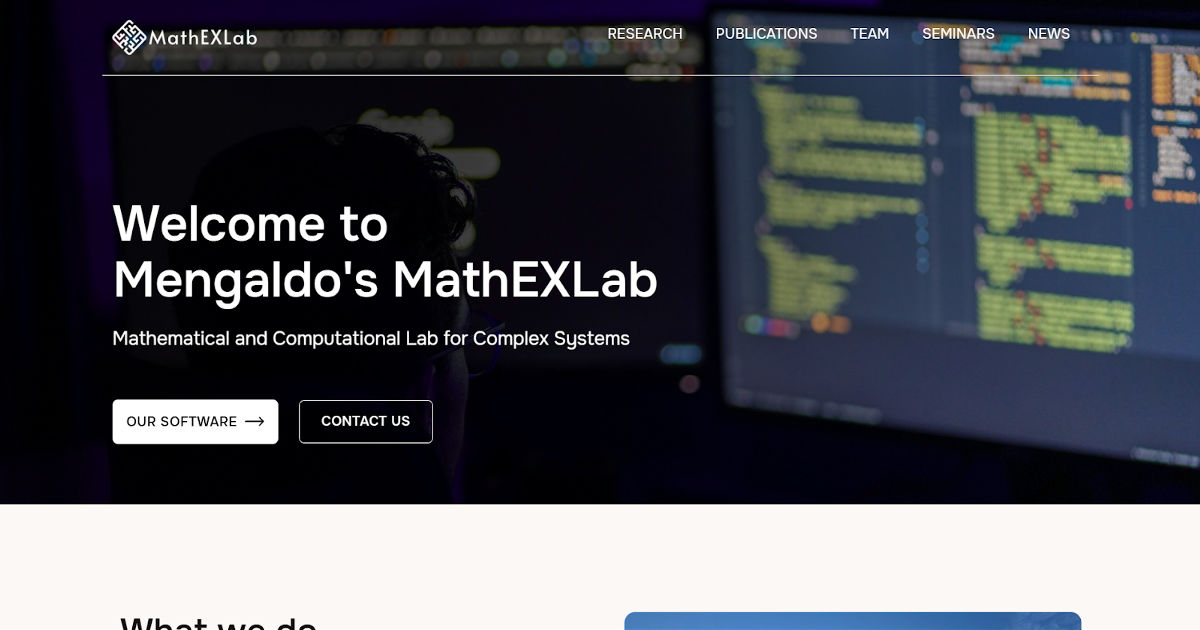
While technically based at NUS, Prof. Mengaldo's MathEXLab is widely cited as a benchmark for Singapore university professor websites and is directly relevant to NTU faculty in computational fields. The approach is worth studying regardless of institution.
What works:
- Philosophy-first framing: The site opens with a Galileo quotation rather than a generic mission statement. This immediately signals intellectual ambition and establishes the lab's identity without jargon.
- GitHub link on the homepage: A direct link to the lab's open-source repositories is featured on the front page — a powerful credibility signal for computational researchers who want to verify reproducibility.
- Partner institution logos: A visual wall of collaborating institutions (NVIDIA, ECMWF, Cambridge, Columbia, Brown) communicates global reach and funding credibility at a glance.
Pattern to steal: For technical research, lead with a philosophical or narrative frame before methodology. It widens the audience without compromising intellectual rigour.
3. Mechanics of Materials Lab – Prof. Ali Miserez, NTU MSE
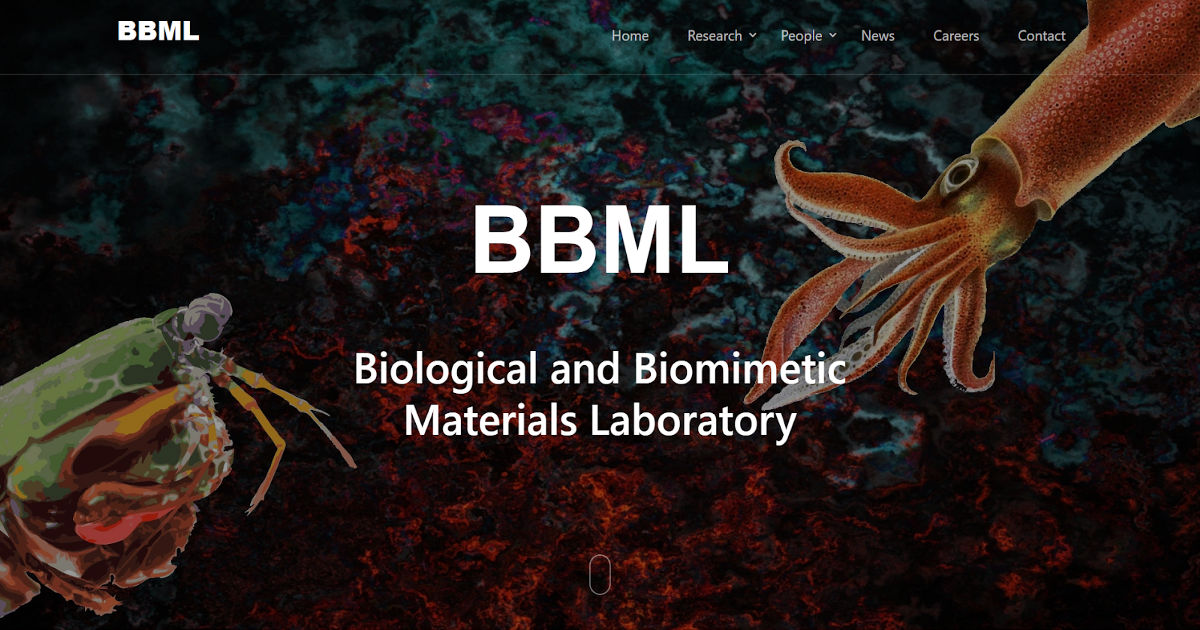
Some of the strongest NTU professor websites come from interdisciplinary materials science labs where research spans biology, engineering, and physics. Prof. Ali Miserez’s site demonstrates how a well-structured academic website can communicate complex bio-inspired materials research while maintaining clarity and credibility.
What works:
- Clear research framing: The homepage introduces the lab’s focus on bio-inspired materials and structural mechanics, explaining how natural materials like shells and biological structures inspire new engineering solutions. This helps visitors quickly understand the research theme without needing deep technical background.
- Strong visual research identity: Images of biological materials, structural diagrams, and microscopy visuals immediately communicate the experimental nature of the work and help visitors grasp the type of materials being studied
- Structured academic sections: Research, publications, teaching, and group information are clearly separated, making the site easy for prospective students, collaborators, and funding bodies to navigate
Pattern to steal:
Use visual examples of research materials or experiments on the homepage to make complex materials science work easier to understand.
4. Protein Cage Design Lab – Prof. Dan Luo, Cornell (Global Benchmark)
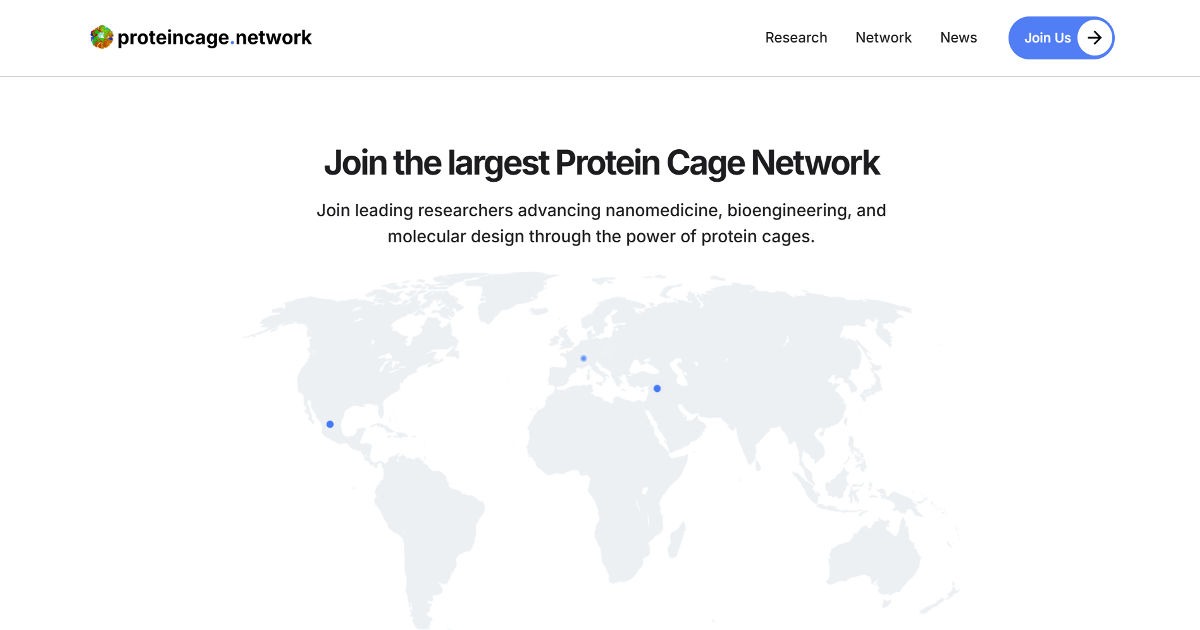
Biomolecular engineering labs often struggle to communicate highly technical structural biology research online. The Protein Cage Design Lab website demonstrates how a focused research theme and strong visual storytelling can make advanced nanobiotechnology research accessible.
What works:
- Focused research narrative: The site clearly centres around a single core idea, engineering protein cages helping visitors quickly understand the lab’s scientific mission.
- Visual molecular illustrations: Structural diagrams and protein visualisations help translate abstract molecular concepts into tangible structures.
- Research outputs connected to applications: The site links protein cage design to applications in drug delivery, nanotechnology, and biotechnology, demonstrating real-world relevance.
Pattern to steal:
Build the site around one clearly defined research theme rather than presenting disconnected projects.
5. Drum Lab – Center for Deep Research on Uncertainty in Machine Learning

Machine learning research groups often rely heavily on technical publications, but the Drum Lab website shows how to present cutting-edge AI research with clarity and structure. The site emphasises research themes and ongoing projects rather than simply listing publications.
What works:
- Theme-based research organisation: Instead of presenting research only through papers, the lab groups work into broader themes related to uncertainty and machine learning.
- Clean project presentation: Projects and publications are linked to datasets, collaborators, and related research outputs, helping visitors explore the work more deeply.
- Clear signals of research activity: Updates, papers, and collaborations highlight that the lab is actively contributing to the field.
Pattern to steal: Organise research pages around themes and projects, not just chronological publication lists.
Not sure whether your current site passes the five-second test?
Try asking a PhD student at a peer institution to spend 30 seconds on your homepage and report back what they understood. Their answer will tell you more than any analytics tool.
→ Let's analyse your current website together!
The Patterns That Separate NTU's Best Professor Websites
After reviewing the NTU professor web presence landscape systematically, six patterns consistently distinguish the strongest sites from the rest.
Pattern 1: Evidence over claims. Weak sites say "we do world-class research." Strong sites show specific named grants (including amounts where possible), publication counts, named awards, and recent conference keynotes. Evidence builds trust; claims don't.
Pattern 2: Design for multiple audiences. Every NTU professor has at least two audiences: peer researchers and prospective PhD students. The best sites deliberately serve a third audience too industry partners, policymakers, or the general public without compromising clarity for either primary audience.
Pattern 3: People are the product. Prospective PhD students are evaluating whether they want to spend four or five years working with you and your team. Photo-rich team pages, welcome posts for new members, alumni placement records, and a visible lab culture convert visitors into applicants.
Pattern 4: Fresh content signals life. A quarterly news update even a single paragraph noting a new paper or a conference presentation — keeps a site feeling alive. The signal it sends to a prospective student is: this lab is active, things are happening here.
Pattern 5: Custom domains travel with you. Labs built purely on NTU institutional subdomains lose their Google search visibility if the professor moves. A custom domain is professional, portable, and protects years of accumulated search equity.
Pattern 6: Mobile optimisation is non-negotiable. Over 60% of web traffic now arrives on mobile devices. Several NTU professor sites render poorly on a phone small fonts, horizontal scrolling, images that break the layout. This immediately signals to a technically-minded prospective student that the professor doesn't prioritise the user experience of people engaging with their work.
Key Insight: According to a 2022 survey by Nature Careers, 65% of PhD applicants reported that a professor's personal website influenced their decision to apply more than the university's ranking or the department's reputation. The quality of the website, not just its existence, was a significant factor.
Does Your NTU Professor Website Pass the Five-Second Test?
Most don't. If a prospective PhD student lands on your site and can't immediately answer what you research, whether your lab is active, and whether you're accepting students — you're losing applicants to colleagues with simpler, cleaner sites.
→ Have your lab website reviewed from a prospective student's perspective
Frequently Asked Questions
Should an NTU professor use the official staff page or build a personal website?
Both have a role, but they serve different purposes. The official NTU staff directory page is necessary for institutional visibility and should be kept current. A personal or lab website, however, allows far more control over design, content, and the narrative around your research. The official page functions as a directory listing; the personal site functions as a recruiting tool and trust signal. Professors who are actively building a lab should invest in both.
How long does it take to build a good NTU professor website?
A clean, functional lab site can be built in one to two weeks of focused effort using a modern platform like Webflow or Squarespace. The actual technical build is often under ten hours; the majority of time goes into writing clear research descriptions, gathering team photos, and organising publications into a readable format. The biggest bottleneck is almost always content, not design.
What platform do most strong NTU professor websites use?
Webflow is the most common platform among newly built high-quality academic lab sites in Singapore, partly because it produces clean, fast, mobile-responsive sites without requiring ongoing plugin management. WordPress is also widely used but requires more maintenance. For technically inclined faculty, static site generators like Hugo or Jekyll are popular and produce extremely fast, low-maintenance sites.
How often should an NTU professor update their website?
Monthly updates are ideal for active labs. The news or updates section is the highest-priority area to keep current even a one-sentence post noting a new paper acceptance, a conference keynote, or a new lab member joining is sufficient to signal that the lab is alive. The minimum threshold is quarterly. A news section last updated more than a year ago actively works against recruitment.
Should a professor's lab website include a personal CV or a separate publications list?
Both, but presented differently. A downloadable full CV (PDF) is useful for visitors who need comprehensive career documentation. On the website itself, the publications list should be organised by research theme or recency rather than presented as a raw citation dump. Highlighting two or three landmark papers with short lay summaries dramatically improves how non-specialist visitors including industry collaborators and prospective students from adjacent fields understand the lab's contributions.
.gif)


